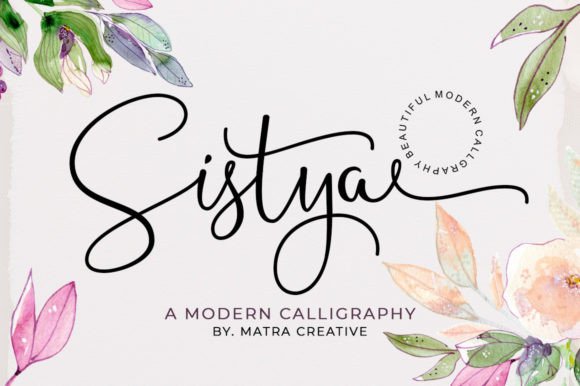
Sistya: A Modern Script Font for Elegant Design Projects
Finding the right typeface for a project often feels like searching for a specific voice. You need something that speaks with the right tone, carries the intended personality, and performs its function without distraction. Sistya enters this search as a compelling option—a script font that balances contemporary style with the enduring grace of classic calligraphy. It’s not merely a decorative face; it’s a tool designed to add a layer of refined sophistication to a wide array of creative work.
The Visual Character of Sistya
At its core, Sistya presents an elegant, flowing script. The letterforms exhibit a beautiful rhythm, with strokes that vary naturally in weight, mimicking the subtle pressure changes of a skilled calligrapher’s hand. This variation is key to its appeal, preventing the static, mechanical look that can plague lesser script fonts. The overall impression is one of fluid movement and balanced construction.
Crucially, the designers achieved a modern atmosphere. While inspired by timeless techniques, Sistya avoids feeling archaic or overly formal. Its proportions and connections feel fresh, making it suitable for contemporary contexts. The font strikes a deliberate balance in its weight—it’s substantial enough to hold its own in a design but retains a lightness that ensures elegance. This careful calibration means it can function effectively as a display font for headlines or as a distinguished element in smaller applications.
Where Sistya Truly Shines: Practical Applications
Understanding a font’s personality is the first step. Knowing where to apply it is where real value is created. Sistya’s versatile elegance makes it a strong candidate across multiple domains.
For brand identity, particularly for businesses in the lifestyle, beauty, boutique, wedding, or artisanal food sectors, Sistya can become a cornerstone. Imagine it on a logo for a high-end skincare line, the masthead of a gourmet magazine, or the branding for an event planning service. It communicates care, quality, and a personal touch. When used in logo design, it creates an immediate sense of sophistication.
In editorial design and packaging design, its strength is in creating focal points. Use it for article titles in a magazine layout, for chapter headings in a book, or for the primary branding on product labels. It draws the eye and sets a premium tone. Paired with a clean sans serif font for body text, it establishes a clear and beautiful visual hierarchy.
Digital spaces benefit greatly from its character. For web design, Sistya can elevate hero sections, promotional banners, or special announcement graphics. On social media graphics, it helps posts stand out in a crowded feed, lending a professional and cohesive look to a brand’s online presence. It’s particularly effective for quotes, announcements, and call-to-action overlays where a personal, human touch is desired.
Integrating Sistya into Your Design Workflow
Adopting a new premium font like Sistya requires a bit of strategic thinking. Start by evaluating its fit for your specific project’s goals and audience. A font that works beautifully for a wedding invitation suite might not be the best choice for a technical manual. The key is alignment between the font’s voice and the project’s message.
Testing font pairing is a non-negotiable step. Sistya’s script nature means it pairs best with simpler, more neutral typefaces. A classic serif font like Garamond or a geometric sans serif font like Montserrat can provide excellent contrast, allowing Sistya’s elegance to shine without overwhelming the composition. The goal is harmony, not competition.
Take full advantage of the font’s features. Being PUA encoded means all alternate glyphs and swashes are easily accessible in most design software. These extras are not just ornaments; they are tools for customization. A well-placed swash can add flair to a logo, while alternate letterforms can improve the flow and readability of a wordmark. Experiment with them to create unique variations.
Always consider readability in context. While Sistya is crafted for clarity, its script nature means it is best used for shorter text blocks—headings, logos, pull quotes, and labels. For extended reading, pair it with a highly legible body font. This practice not only ensures your content is accessible but also reinforces a professional design sensibility.
Finally, understand the licensing. As a commercial font, ensure you have the appropriate license for your intended use, whether for personal projects, client work, or digital products. This is a fundamental part of respecting the craft and ensuring your work is legally sound.
In a landscape saturated with generic options, a thoughtfully designed script font like Sistya offers a distinct advantage. It provides a reliable way to inject elegance, personality, and a modern classic sensibility into your projects. By applying it with intention and pairing it wisely, you can leverage its design to enhance recognition, build a stronger brand perception, and engage your audience on a more aesthetic level. It’s a valuable addition to any designer’s or creator’s toolkit of design assets