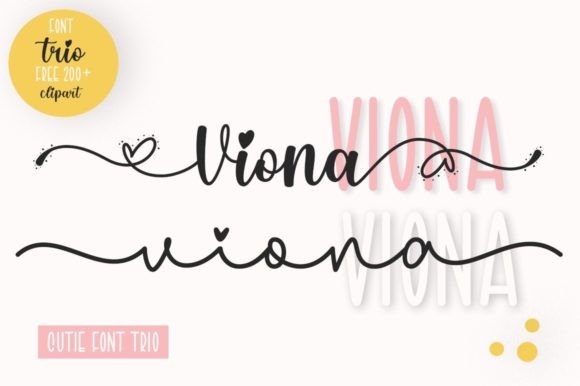
Viona: The Creative Font Trio for Chic Branding
Finding a typeface that balances personality with professionalism is a common challenge in design. You want something with flair, but it also needs to be functional. A font that feels personal yet polished. This is where a well-considered font family like Viona becomes a practical asset. It’s not just a single style, but a trio of complementary typefaces—a handwritten font, a script font, and a regular display font—designed to work in harmony. This collection offers a versatile toolkit for adding a chic and cheery touch to a wide array of projects.
Anatomy of a Versatile Font Family
Understanding the distinct character of each component within the Viona font family is key to using it effectively. Each style serves a specific purpose, and their true strength emerges when they are used together to create a cohesive visual language.
The handwritten font in the Viona collection brings an organic, personal quality. Its strokes mimic the natural flow of a pen or brush, making it ideal for adding a human touch. Think of it for short, impactful statements, quotes, or social media callouts where authenticity is valued. It’s less about long paragraphs and more about creating an emotional connection in headlines or accents.
Next is the script font, which offers a more refined and elegant cursive style. This is your go-to for logos, branding marks, and editorial titles that need a sophisticated, flowing aesthetic. The script font in Viona often features beautiful swashes and ligatures, allowing for custom, high-end lettering in wedding stationery, boutique packaging, or premium product labels.
Finally, the regular display font grounds the family. This is a sturdy, readable typeface that handles subheadings, body text, or any context where clarity is paramount. It complements the more expressive styles by providing a clean, modern foundation. Its design ensures that when paired with the handwritten or script fonts, the overall look remains balanced and legible, not chaotic.
Practical Applications Across Creative Fields
The real test of any creative font is how it performs in the wild. Viona’s three-style system adapts beautifully to numerous professional and personal projects, solving specific design problems with style.
For brand identity and logo design, using the script font for the primary logotype and the regular display font for the tagline creates immediate hierarchy and elegance. A craft brewery might use the handwritten font on its tap handles for a rustic feel, while a boutique bakery could use the script on its packaging and the display font on its menu for a cohesive, charming brand experience.
In editorial design and publishing, the font trio excels at creating visual interest. A magazine spread could use the script font for pull quotes, the handwritten font for sidebar annotations, and the display font for article headlines and body copy. This approach guides the reader’s eye and breaks up dense content with moments of personality.
Digital applications are equally strong. For web design, the display font ensures readability for navigation and body text, while the script or handwritten fonts can be used sparingly for impactful hero section headings or call-to-action buttons. In social media graphics, the handwritten font can make a promotional quote feel personal and shareable, while the script font can add a premium feel to a sale announcement.
Even in packaging design, the combination works wonders. The script font can label the product name, the display font can list the features and ingredients clearly, and the handwritten font can add a small, friendly message like “Made with love.” This layered approach creates a rich, engaging design that tells a story on the shelf.
Making Smart Design Choices with Viona
Adopting a multi-style font family requires a thoughtful approach. Here’s how to integrate Viona into your workflow effectively.
First, evaluate project fit. Is the goal to convey whimsy, elegance, or friendly professionalism? Viona’s personality leans towards the chic and cheery, making it perfect for lifestyle brands, creative agencies, personal blogs, and artisanal products. For a corporate law firm or a medical journal, its expressive styles might be better suited as accent fonts rather than primary ones.
Next, consider readability and visual hierarchy. Use the regular display font for any text that needs to be read in paragraphs or at small sizes. Reserve the script and handwritten fonts for larger sizes where their intricate details can be appreciated without hindering comprehension. Always test your designs at the intended size and on the intended medium—what looks stunning on a large poster may become illegible as a web font at 16 pixels.
Test font pairings thoughtfully. While the three Viona fonts are designed to work together, you may also pair them with a simple sans serif font or a serif font from outside the family for specific needs. For instance, pairing the Viona script with a clean, geometric sans serif for body text can create a modern and balanced layout. The key is to let Viona’s expressive styles be the star, supported by more neutral typography.
Finally, understand the commercial licensing. As a premium font, Viona comes with a license that typically covers most standard commercial uses, but it’s crucial to verify the specific terms for your project—whether it’s for client work, merchandise, or digital products. This ensures you’re using this design asset correctly and ethically.
By treating Viona not as a single font but as a coordinated system of typeface styles, you unlock its full potential. It becomes a versatile component of your modern typography toolkit, capable of elevating the professionalism and recognition of your work across countless applications.